
Japan’s Haunted Legends:
Ghosts, Spirits, and Yokai
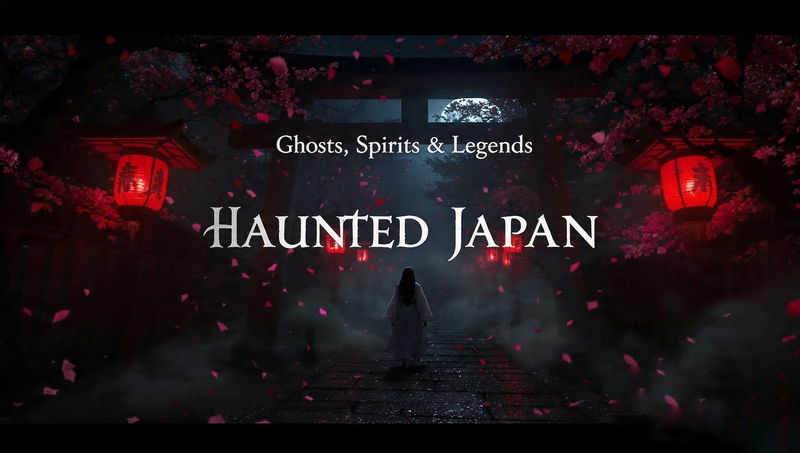

Japan is a country where ancient traditions and modern life exist side by side. Along with beautiful temples, quiet forests, and centuries-old stories, Japan also has a deep and fascinating relationship with the supernatural. Ghosts and spirits are not just part of horror movies there—they are woven into folklore, religion, festivals, and everyday beliefs.
For hundreds of years, Japanese people have told stories about spirits that linger between the world of the living and the dead. These stories are known not only for being frightening but also for carrying emotional depth, tragedy, and lessons about life and justice.
The Spirit Known as Yūrei
In Japanese folklore, the most common type of ghost is called a Yūrei. These spirits are believed to be the souls of people who died with strong emotions that kept them from moving peacefully into the afterlife.
A Yūrei is often described in a very specific way. It usually appears wearing a white burial kimono, with long black hair falling over a pale face. Unlike living people, these ghosts are said to have no feet, floating silently through the air.
This image has become so iconic that it inspired many famous Japanese horror films, including The Ring and The Grudge, where the ghosts slowly move with an eerie and unsettling presence.
When Spirits Seek Revenge
Some ghosts in Japanese folklore are far more dangerous. These are known as Onryō, which are vengeful spirits driven by anger and betrayal.
According to legend, when someone experiences extreme suffering, injustice, or heartbreak before death, their spirit may return seeking revenge. These spirits are feared because their anger is believed to be powerful enough to cause illness, accidents, or even disasters.
One of the most famous stories is about Oiwa, a woman who was betrayed and poisoned by her husband. Her tragic death turned her into a terrifying spirit who haunted him until he lost everything.
Stories like these have been passed down through generations, reminding people of the consequences of cruelty and betrayal.
Yokai: Japan’s Strange Supernatural Creatures
Not every supernatural being in Japan is a ghost. Many belong to a much broader category called Yokai. These are mysterious creatures or spirits that can appear in many different forms.
Some Yokai are playful, while others are mischievous or dangerous.
For example, the Kitsune, or fox spirit, is famous for its ability to transform into a human. In many stories, these fox spirits trick people or secretly live among them.
Another well-known creature is the Kappa, a strange water spirit said to live in rivers and ponds. Although often portrayed humorously today, old stories warned children to stay away from deep water because of these creatures.
These legends show how Japanese folklore blends imagination, nature, and moral lessons.
When the Dead Return Home
Japan even has a festival dedicated to welcoming spirits back to the world of the living. This event is called Obon, and it usually takes place in August.
During Obon, families believe that the spirits of their ancestors return home for a short time. People visit graves, clean family memorials, and light lanterns to guide the spirits.
In many towns, traditional dances known as Bon Odori fill the streets with music and celebration. At the end of the festival, glowing lanterns are placed on rivers or the sea, symbolically guiding the spirits back to the afterlife.
It’s a beautiful tradition that reflects the strong respect Japanese culture has for ancestors.
A Culture Where Ghost Stories Never Fade
Ghosts in Japanese culture are not simply meant to scare people. Many of these stories explore deep human emotions—love, revenge, regret, and loss.
This is why Japanese horror often feels different from typical horror movies. Instead of relying only on sudden scares, it creates a slow and haunting atmosphere that stays with the audience long after the story ends.
From ancient folklore to modern films and anime, Japan’s fascination with spirits continues to capture imaginations around the world.
And perhaps that’s why these stories remain so powerful. In Japan, the line between the living and the spirit world has always felt just a little thinner than we might expect.

Comments
No comments yet. Be the first to comment!